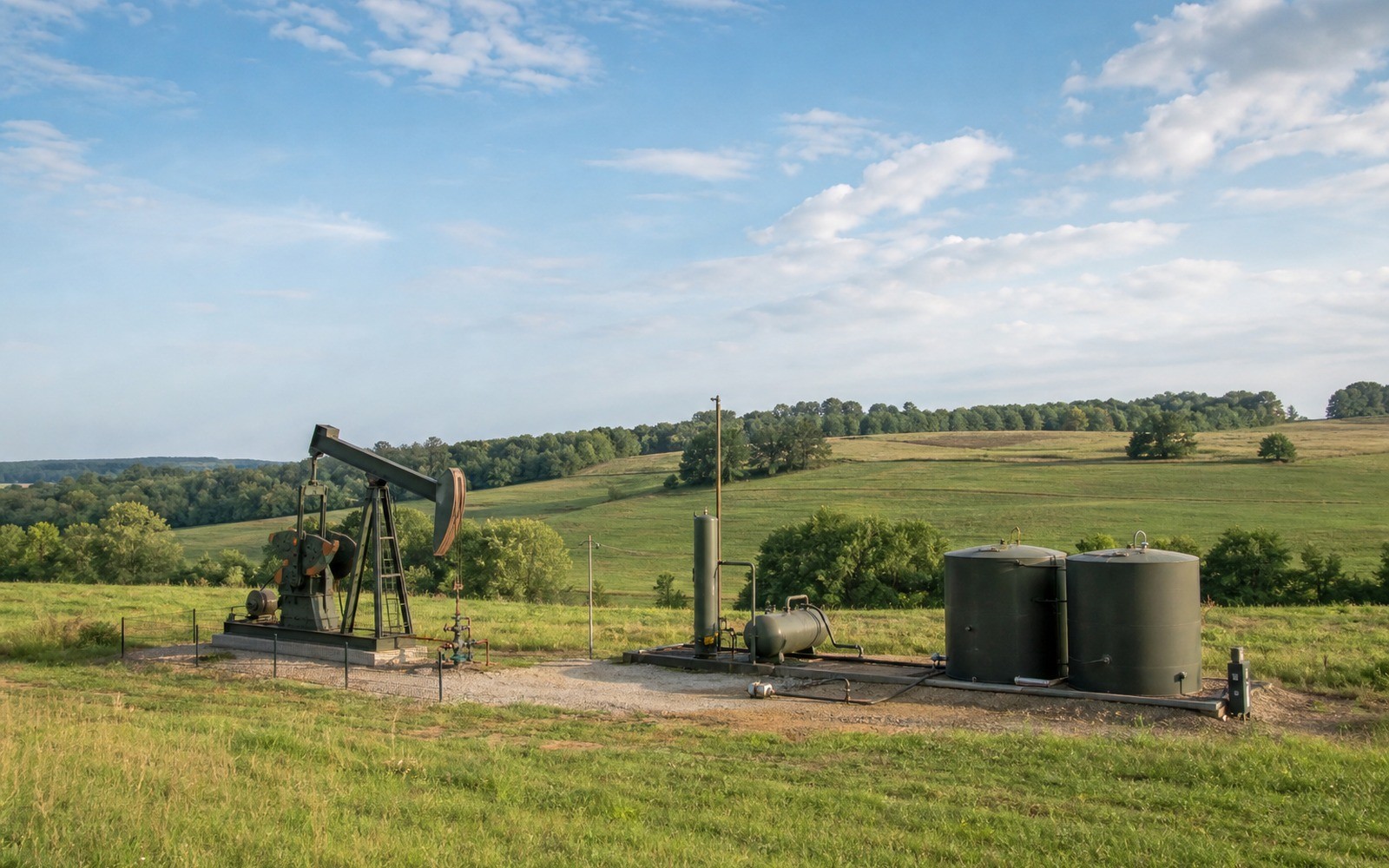
Surface vs. Mineral Estate
Owning the land and owning what's beneath it are two separate legal estates in Oklahoma, and a surprising number of owners don't realize the two were split apart, sometimes generations ago, until a lease offer or a title search brings the question up.
Under Oklahoma law, the surface estate and the mineral estate can be owned by entirely different people, a situation called a 'severed' estate. It happens when a landowner sells the surface but reserves the minerals, sells the minerals but keeps the surface, or when an estate divides the two among different heirs over successive generations. Once severed, each estate can be bought, sold, leased, and inherited entirely independently of the other.
This matters enormously for a family trying to understand what they actually own. Some families own the family farm's surface but not a single mineral acre beneath it, having sold or lost the minerals generations ago; others own mineral rights under land they've never lived on and may not even know the address of, inherited purely as a mineral interest with no surface attached at all.
Why the mineral owner generally controls what happens below ground
In Oklahoma, the mineral estate is typically the 'dominant' estate, meaning the mineral owner (or their lessee, the operator) has the legal right to reasonable access to the surface in order to explore for and produce oil and gas, even if they don't own the surface itself. That's balanced by surface damage and compensation requirements when an operator's activity affects a working surface owner's land, but the basic legal framework gives development rights to the mineral side.
If you own only the surface and someone else owns the minerals beneath your land, you generally can't stop a lessee from drilling, though you're entitled to compensation for any surface damage caused by that activity. If you own only the minerals, you similarly don't need the surface owner's permission to lease your interest, though practical access arrangements are still typically coordinated.
Figuring out which estate you actually hold
The clearest way to confirm what you own is a title search at the county clerk's office, tracing the deed history for both the surface and mineral estates on your specific tract - they may have been conveyed together at some point and severed at another, and the paper trail shows exactly when and how. If you've simply inherited land without a clear picture, this research is usually the necessary first step before any leasing or sale decision.
It's common for families to assume they own 'the land' in full when in fact a prior generation sold the mineral rights decades ago, or the reverse - to think they only have surface acreage when a mineral reservation from an even earlier sale was never conveyed away and technically still sits with an ancestor's estate.
What this means if you're only selling the minerals
If you own both estates but only want to sell the minerals, that's a common and straightforward transaction - you retain full ownership and use of the surface, and the mineral deed conveys only the subsurface rights. The buyer then holds the same rights any mineral owner has: to lease the interest to an operator and collect the resulting bonus and royalty.
This is worth understanding clearly before signing anything, since some owners mistakenly worry that selling minerals affects their surface property in some way - it doesn't, beyond the standard reasonable-access rights that any mineral owner (or their lessee) already has regardless of who holds the minerals.
Surface damage agreements and what they cover
When a mineral owner's lessee needs to access a working surface owned by someone else, Oklahoma law generally expects reasonable compensation for actual damage - lost crops, disrupted grazing, or road and pad construction - though the specific process and amount are often negotiated directly between the operator and surface owner through a surface use or damage agreement rather than set by a fixed formula.
If you're the mineral owner in a severed situation, you're generally not a party to that surface damage negotiation, though it's useful context to understand, since it's part of what makes your mineral interest developable in practice and not merely on paper.
Questions Oklahoma owners ask
How do you find out if your mineral rights were ever severed from your land?
A title search at the county clerk's office tracing the deed history for your specific tract is the clearest way to confirm this. We can help research this as part of reviewing any mineral interest you believe you may hold.
If you sell your mineral rights, does that affect your ownership or use of the surface?
No, selling the mineral estate doesn't transfer or change your surface ownership. You keep full use of the land, subject only to the standard reasonable-access rights any mineral owner or their lessee holds for exploration and production.
Can someone drill on your land if you don't own the minerals beneath it?
Generally yes - the mineral estate is typically the dominant estate in Oklahoma, meaning the mineral owner or their lessee has a right to reasonable surface access, though you're entitled to compensation for surface damage caused by that activity.
you only inherited mineral rights, no surface acreage at all - is that unusual?
Not at all, that's a common outcome of severed estates passing through different lines of a family or being sold separately over multiple generations. Many owners hold pure mineral interests with no surface property attached.
Am you entitled to compensation if drilling activity damages your surface land?
Generally yes, for actual damage caused by the operator's access and construction, typically worked out through a surface use or damage agreement between the operator and the surface owner directly.
Keep reading before you sign
Working Interests
Own a working interest in an Oklahoma oil and gas well and carrying operating costs? See how a working interest is valued differently to sell.
Mineral Rights
Understand what mineral rights actually are in Oklahoma, how they differ from royalties, and what a fee mineral interest is worth to sell.
Non-Participating Royalty (NPRI)
Own a non-participating royalty interest (NPRI) in Oklahoma? Understand what makes it different to value and sell versus a standard royalty interest.